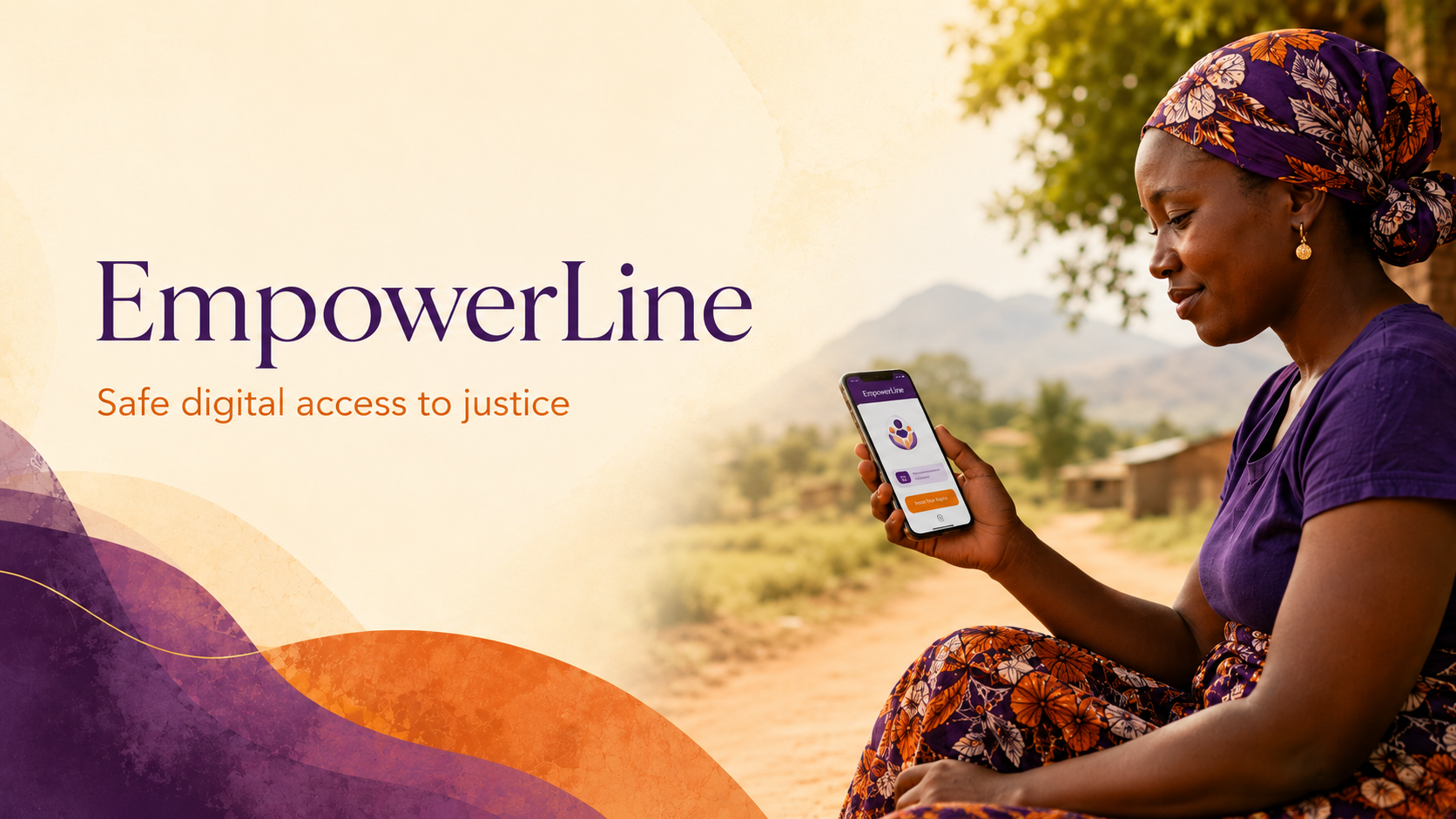
The EmpowerLine App
In Malawi, EmpowerLine speaks.
The Gender and Justice Unit (GJU) is a non-governmental organization in Malawi that uses legal empowerment as a catalyst for gender equality and social and environmental justice. GJU works through strategic litigation, legal research, advocacy, and partnerships to promote access to justice across the country.
In Malawi, 34% of women have experienced physical violence, yet only 40% of survivors seek help. Against this backdrop, EmpowerLine is changing what’s possible. EmpowerLine Malawi is a mobile and free platform that gives survivors of violence real-time access to justice, in their language, on any device.
When laws exist, but justice is not arriving
Despite progressive laws, for the vast majority of women in Malawi, especially in rural areas, it remains inaccessible. The reasons include limited access to legal information, language barriers, stigma, and a justice sector that is largely male-dominated and often rules against women. GJU is doing critical work to help women access information on domestic violence statutes, child protection, and workplace rights.
Building trust, one tap at a time
With Chameleonic, our work focused on a clear challenge to bridge the justice gap using technology. The question was not simply whether we could build an app, but how to build one that a woman would trust and actually use in a moment of need.
Our project applied human-centered design methodology to shape a digital product strategy. Our role was to translate GJU’s deep legal knowledge into a scalable, user-friendly tool. We ran workshops and conversations with GJU staff to map the user journey, with a strong emphasis on privacy and simplicity.
We designed the experience to feel like supportive, conversational guidance. In parallel, we focused on building GJU’s internal capacity to manage and update a digital knowledge base.
A lifeline, now open 24/7
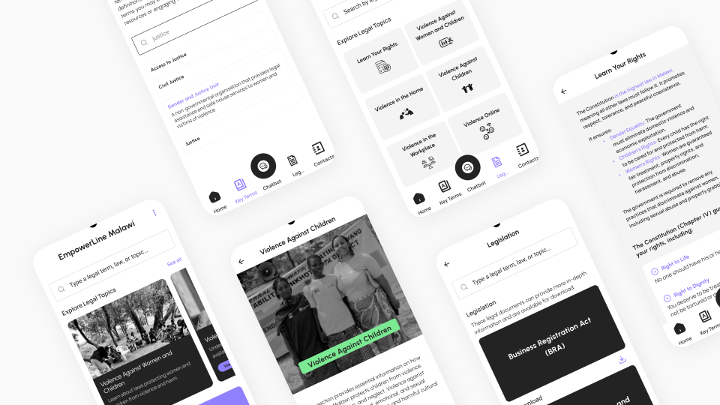
The immediate outcome was the launch of the EmpowerLine App. Integrated with GJU’s existing hotline, the app now gives women access to 24/7 scalable support.
EmpowerLine was co-created with and for paralegals, communities members, and survivors. Every word and feature was shaped by real needs. Women who once faced stigma or fear now have a private way to seek help.
Months after launch, while the numbers are not yet large - over 270 downloads - we have not yet focused on marketing. We know the tool serves as a first-line response for women in crisis, but we also know the impact can grow.
GJU’s credibility as a digital leader has strengthened. They have a tangible asset that demonstrates how to scale justice in a low-resource setting. EmpowerLine works because it is integrated into GJU’s broader model: community liaisons, legal clinics, mobile courts, psychosocial support, and partnerships with justice-sector actors.
GJU can now provide survivors and community members with immediate, private, 24/7 access to legal information and referral pathways, even when they are far from a legal clinic, unable to travel, or not ready to speak directly to another person. Before EmpowerLine, our work depended more heavily on in-person legal clinics, community liaisons, hotline support, and mobile court processes. Those remain central, but EmpowerLine now keeps legal empowerment available between those points of contact. This means a survivor can take the first step anonymously, in her own language, and on her own phone, while still connected to the wider GJU ecosystem of community liaisons, psychosocial support, legal aid referrals, and formal justice pathways. In that sense, EmpowerLine has helped us move from episodic support to continuous support.
- Sarai Chisala-Tempelhoff, Founder of the Gender and Justice Unit
As the consultant responsible for this project, I learned that the real barrier was not technological literacy, it was trust. Removing the fear before removing the questions.
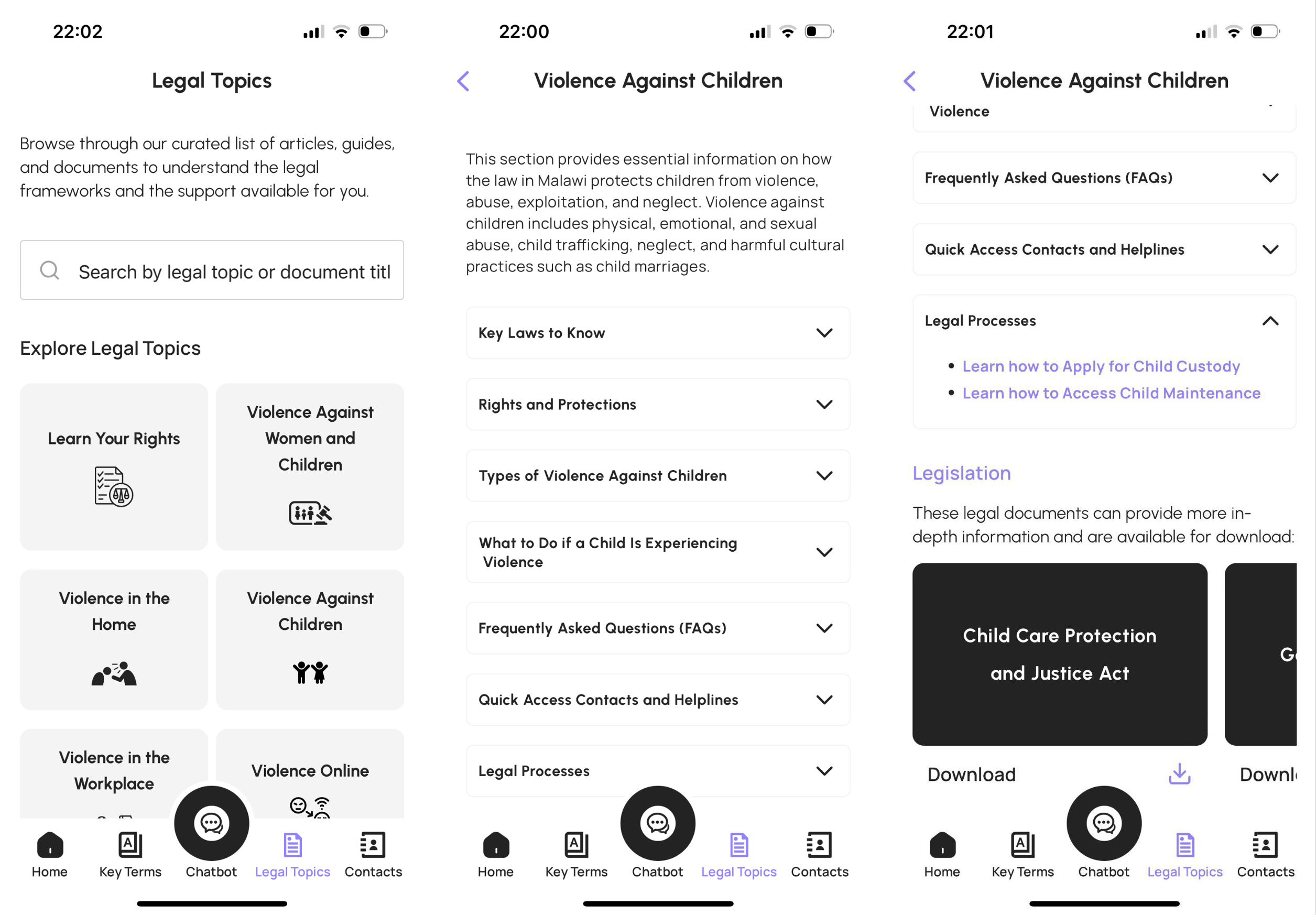
The women using this app are concerned about their data and afraid of further violence. We worked to eliminate those barriers. The app is free to access, and it includes a list of important emergency telephone numbers, being the most accessible and user-friendly for anyone that needs support.
Another learning is the chatbot. We trained it not to hallucinate - a common problem with many AI systems - so it restricts itself to information found only in the available legal documents or contacting a legal professional. This is an ongoing challenge, because most of the time the chatbot will ask the person to contact a legal professional directly.
Still building, still listening
The ongoing work of an app also involves real testing and feedback-driven improvements, which we are currently pursuing. We are now refining the chatbot in more detail, making it accessible via audio, and working on an update to improve the bilingual option (in Chichewa).
For GJU, the project fundamentally reshaped its approach to decision-making. Today, every programmatic choice - whether digital or legal empowerment - begins with a single, grounding question if the survivor will feel safe enough to use, understand, and act on the information it provides. This shift means that anonymity, local language, survivor safety, referral pathways, and community ownership now carry significantly greater weight in the organization's strategic discussions and resource allocation.