Nonprofit Builder Blog

When the map doesn't fit the territory: designing a MEL system for strategic environmental litigation

Monitoring, Evaluation and Learning practitioners working with litigation and advocacy organisations have long wrestled with a structural mismatch : the frameworks commonly used were built for a different kind of work. Logframes assume countable outputs and plausible attribution. Results matrices assume that change happens within project cycles. Neither assumption holds in strategic litigation, where a brief filed today may reshape environmental jurisprudence five years from now, through mechanisms that run simultaneously through courts, regulatory bodies, scientific institutions, and public opinion. AIDA , the Interamerican Association for Environmental Defense, approached Stone Soup Consulting to design its MEL system for the 2024–2027 Strategic Plan, this mismatch was the starting point. What followed was an eight-month process of diagnosis, co-design, and methodology transfer that produced Legal Outcome Mapping (LOM) : a framework built specifically for complex, multi-actor legal strategies. What the diagnosis revealed Before designing a MEL system, our team spent several months learning how AIDA actually worked . We reviewed strategic documents, conducted leadership interviews, facilitated workshops, and ran a survey. The picture that emerged was one of a learning organisation. AIDA's teams generated significant information, tracking cases, documenting interactions with stakeholders, and registering outcomes. The challenge remained to find a common system that works across strategies and program areas and that is also easy to maintain. At the same time, the team felt a genuine desire to develop a more rigorous monitoring, evaluation and learning system, alongside a real concern that more structure would mean more administrative burden. It was evident that AIDA had a wealth of knowledge, and that it was time to connect, organise, and strengthen capacities that already existed; not to install a system from the outside. The methodological challenge AIDA's mission is to strengthen people’s ability to defend their right to a healthy environment by using the law, science, and communications to protect ecosystems and communities across Latin America. To achieve this, their work expands over four main program areas: climate, ocean, human rights, and territories. Six main strategies make all this work happen, including legal cases, scientific evidence, community-based work, communications, policy advocacy, and protection. AIDA’s programmatic areas share an organisational home but operate through fundamentally different -and complex- theories of change and with multidisciplinary teams , including lawyers, economists, scientists, and communicators. Moreover, AIDA's teams operate in a fast-moving sector requiring attentiveness and timely interventions. The diversity was too great. The breakthrough came from a different question: What do all of AIDA's strategies share? What is the common denominator across themes, strategies, and geographies? How can we build a solid system that does not burden busy teams? The answer was stakeholder change. Whether AIDA files a legal brief, publishes a scientific report, or accompanies an Indigenous community through a regulatory proceeding, the operative mechanism is always the same: a specific actor, such as a judge, a regulator, a legislator, a development bank, changes their position, behaviour, relationship, or capacity in ways that advance the protection of the human right to a healthy environment. This is how AIDA produces change, across every programme, every geography, every strategy. This insight, drawn from Outcome Mapping's contribution-over-attribution logic and Outcome Harvesting's actor-centred approach to complex systems change, unlocked a common unit of analysis. The same core questions applied everywhere: who changed, what changed, and how did AIDA contribute to that shift? The Legal Outcome Mapping framework Over eight months, AIDA and Stone Soup worked together closely, through knowledge transfer sessions , co-creation sessions, and asynchronous validation exercises. Together we designed Legal Outcome Mapping (LOM) — a framework that integrates Outcome Mapping, Outcome Harvesting, and complex multi-actor advocacy evaluation practice into a system grounded in the logic of legal strategy. At its core is Case Theory : a practice already familiar to their legal teams, repurposed as the unit from which all monitoring flows. From there, the system tracks how actors change across the case ecosystem, consolidates that information at the programme level, and transforms it into institutional evidence for leadership, fundraising, and communications. Governance was co-designed with the same logic: clear roles at each level, from the case manager who registers changes as they occur, to the programme focal point who consolidates them in an accessible format, to the MEL lead who produces evidence, so that accountability is distributed without creating new layers of management. The system also creates an explicit link between day-to-day case operation and the strategic plan, allowing the organisation to read how individual cases connect to institutional objectives , and where gaps exist between strategy and practice. The framework was validated by applying it to a successful litigation case study, and tools were adjusted to reflect the available information and the capacity to collect information within the cases. Six design principles The framework was built around six principles, defined with AIDA's team: Structure without bureaucracy. Operational clarity over rigid formalisation. Fixed outcomes, negotiable tools. A common indicator floor that enables institutional comparison, combined with real flexibility at the programme level. This resolves the apparent contradiction between comparability and adaptation. Built from the inside. The Design and Implementation Committee and the Steering Committee co-designed the system. They did not receive it. Lightness as a condition of survival. If the system does not fit into real workflow, it will not survive Learning, not just reporting. The complete cycle is registration, analysis, decision, and learning. Minimal administrative burden for operational teams. What this suggests for complex systems MEL The unit of analysis is the key design decision. In complex advocacy, what you choose to measure determines what you can see. Stakeholder change is more honest and more tractable than outputs or activities for organisations working through indirect mechanisms over long time horizons. Diagnosis before design. AIDA had already generated substantial information. Building on existing practices rather than overlaying a new system was both more efficient and more likely to survive. Appropriation requires genuine agency. The distinction between consultation and co-creation is not rhetorical. It is the difference between a system that lasts and one that doesn't. Flexibility and rigour are not in tension. The fixed-outcome / flexible-tool architecture is the practical resolution. Standardise what needs to be compared; adapt everything else. About AIDA: AIDA - Interamerican Association for Environmental Defense i s a pioneer regional organisation of environmental legal experts from and based in Latin America working for environmental protection and climate justice. For over 28 years, AIDA has used the law and science to protect some of the world’s most vulnerable and endangered habitats and communities in the region suffering from environmental harm. With Justice, Governance, and Partnership as its pillars, AIDA prioritizes high-need, high-impact cases that can set replicable precedents, therefore fundamentally changing laws to fortify environmental protection and address the climate crisis. About the authors: Emilia Carrara , AIDA’s Director of Strategy With a background in environmental science, Emilia has worked with AIDA for over nine years, supporting the strengthening of institutional strategy, development processes, and internal capacity-building. Inji ElAbd , Principal Consultant at Stone Soup and Project Coordinator With a background in economics, international cooperation and art therapy, Inji is an evaluator specializing in complex portfolios, intersectional evaluation and participatory and arts-based methods. T he Project team at Stone Soup included Andrés Trujillo Lentini , Federico Diaz Sahr , Samantha Colli with Claudia Pedra , Stone Soup Managing Partner, as Project Supervisor. Stone Soup Consulting · stone-soup.net · stone-soup@stone-soup.net

22 Sep, 2026 10:29 Read more

Competing for Funding: Is Your Organisation Ready to Win?

“Funders do not invest in proposals alone. They invest in organisations they believe can turn resources into credible impact.” Over the years, I have seen good teams put enormous effort into proposals that looked strong on paper and still did not win. The theory of change was sensible, the budget was carefully prepared and the technical team knew the sector. Naturally, the post-mortem focused on the document: Was the design strong enough? Was the price too high? Did we explain the impact clearly enough? Those questions matter. But after more than two decades working in international development, I have come to ask a different one first: was the organisation itself ready to compete for the opportunity? That distinction matters because resource mobilisation is not simply a proposal-writing exercise. A proposal is the visible product, but funders are also making a judgement about the organisation behind it: whether it has the strategy, systems, relationships and credibility to turn funding into measurable, sustainable impact. The funding landscape is changing This question has become more urgent as the funding landscape has become less predictable. Traditional aid budgets are under pressure, donor priorities are changing, and the disruption to USAID-funded programmes and wider shifts in U.S. foreign assistance have shown how quickly long-established funding channels can change. For NGO leaders, the implication is uncomfortable but important: we cannot build a funding strategy around the assumption that yesterday's donors will still be there tomorrow. Organisations need a more resilient mix of relationships across bilateral and multilateral donors, governments, foundations, the private sector and other financing partners. At the same time, the problems we are trying to solve are becoming more complex. Climate risk, health, livelihoods, inequality, humanitarian shocks and institutional capacity rarely sit neatly within the capabilities of one organisation. In practice, this means NGOs increasingly have to compete and collaborate at the same time. An organisation may be a competitor in one opportunity and a consortium partner in the next. I see this less as a contradiction and more as a new organisational capability: knowing when to lead, when to complement and when collaboration will produce a stronger result than going alone. Know what makes you worth choosing One of the most useful questions I have learned to ask is: what is our unique value proposition for this opportunity? The answer should sit at the intersection of three things - what we are genuinely good at, what the donor is trying to achieve, and who else could credibly do the work. That competitive field is broader than many NGOs assume. It can include other NGOs, managing contractors, consulting firms, social enterprises and commercial companies. So the question is not simply, 'Can we deliver this programme?' It is, 'Why should the donor choose us - or choose us as part of a consortium - over credible alternatives?' This is where organisational self-awareness becomes important. A strong organisation knows what it can lead, where it needs partners, and which capabilities it should not pretend to have. In my experience, that clarity produces better partnerships and more credible proposals. Delivery matters more than promises I also believe NGOs need to be much clearer about the difference between delivering activities and delivering impact. Funders increasingly want evidence that an organisation can move beyond outputs to measurable change. That means implementation discipline, adaptive management, local partnerships and the ability to work through government and community systems. Value for money is part of the same conversation. It should not be reduced to being the cheapest bidder. The real question is whether the organisation can explain the value created for the resources required. What impact can reasonably be achieved per dollar? What can be leveraged through partnerships? What will remain after the funding ends? Credibility with key stakeholders matters just as much. Host-country government, regulators, local authorities, communities and sector partners often determine whether a programme can operate at scale. An NGO that is trusted by these stakeholders gives a donor greater confidence that implementation can be accepted, coordinated and sustained. Build the organisation before the opportunity This is why I no longer think the best resource-mobilisation question is only, 'How can we write a stronger proposal?' A better question is, 'How can we become an organisation that funders and partners are confident investing in?' That shifts resource mobilisation from a deadline-driven activity to an organisational capability. It requires strategic clarity, proven delivery, credible evidence, trusted relationships, disciplined use of resources and the judgement to know when to compete, when to collaborate and when to do both. Before committing heavily to the next opportunity, I would ask five questions: Is this strategically important for us? Can we demonstrate relevant results? Do we have the people, systems and leadership capacity to deliver measurable impact? Are our partnerships strong enough? And can we clearly explain why our organisation - or our consortium - offers a stronger pathway to impact than credible alternatives? If several of those answers are unclear, the problem may not be the proposal. The problem may be organisational readiness. Good proposal writing still matters. But the organisations that consistently mobilise resources tend to build their credibility long before the opportunity appears. The proposal is simply the final expression of the organisation behind it.

22 Sep, 2026 07:10 Read more
The Impact Behind the Impact: Investing in Local Capacity
Roseline OrwaRoseline Orwa

The Impact Behind the Impact: Investing in Local Capacity

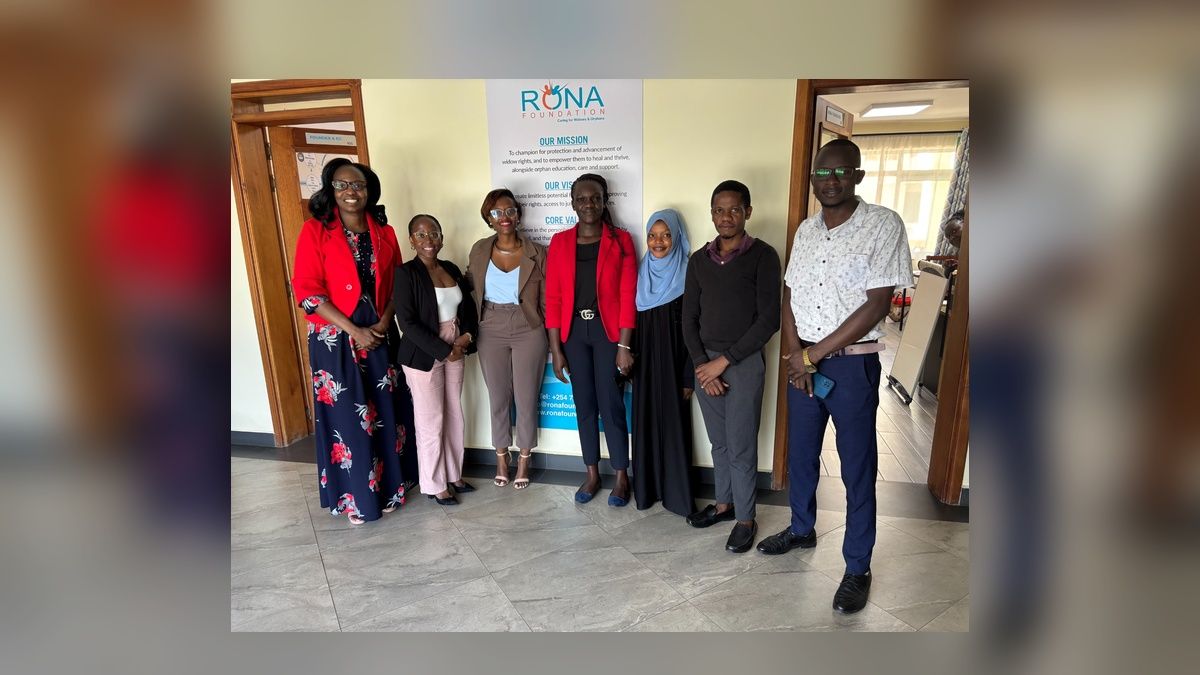
Recently in Nairobi, at Segal Connect 2026 , dubbed The Next Beat , the Segal Family Foundation celebrated 20 years of impact and trust-based philanthropy. The drums began before the stories did. Rhythm, colour and movement filled the room. It was more than an anniversary celebration. It felt like a living archive of what Africans have imagined, built and sustained when given the trust and resources to lead from where they stand. Across the showcase, from anglophone to francophone Africa, the evidence was compelling: innovations born in conditions of scarcity, solutions shaped by lived experience, leaders exercising critical thought, and organisations stretching every resource to meet needs that are often far greater than their budgets. There was creativity, but also discipline; ambition, but also prudence. Most importantly, there was evidence of African agency —not people waiting for solutions, but people creating them. And Rona Foundation , a widow human rights organisation I founded and lead, was privileged to be part of that story. Now that the dust has settled, and as we, alongside fellow partners and allies, reflect on who we have become and what we have collectively built, I find myself thinking about something less visible: the investment beneath the visible impact. Because, one of Segal's most thoughtful contributions has been its decision to bring Nonprofit Builder (NPB) into its ecosystem of support. It reflects an important understanding of philanthropy: funding the work is only one part of strengthening social change. The institutions carrying that work also need opportunities to learn, reflect, question themselves and grow. It was, in my view, an ingenious decision. For Rona, this has not been a one-off intervention. Through Nonprofit Builder , we have had access to continued organisational learning and capacity strengthening, including modules that have enabled us to examine our leadership, strategy, fundraising, systems and safeguarding. That continuity matters. So does the opportunity for all staff across the partner organisation to access different modules twice a week throughout the year. This means learning is not held by one person; it can move through the organisation, shaping how we think, work and grow together. Take the safeguarding module by Shermin Moledina, which we undertake annually. It has encouraged us to look beyond safeguarding as a compliance exercise: another policy, another form, another requirement. Returning to this learning each year invites us to examine power, dignity, accountability and the responsibility we carry towards the people whose lives we touch. Equally, the fundraising module has greatly helped me look beyond fundraising as the search for money and towards fundraising as a question of organisational clarity. What are we building? Why does it matter? What makes our contribution distinctive? Who might share that vision? Through Nonprofit Builder , I was matched with Bill Bruty of Fundraising Training Ltd as a mentor, and his mentorship deepened that learning. Those questions have stayed with me. Together, these learning experiences have reinforced a lesson I have come to value deeply: capacity building is not about making organisations more acceptable to funders. It is about helping them become more capable of carrying their own vision. And that is a very different proposition. It means creating spaces where founders, leads and staff can think beyond the next grant. It means making room for difficult questions, peer learning, expert advice and honest reflection. It means recognising that sometimes the most important organisational change happens quietly—a founder changes a decision, a team strengthens a practice, an organisation becomes more confident about what it will and will not do. These changes rarely have clear indicators, and are unlikely to appear in a grant dashboard. Yet they often determine whether an organisation survives, adapts and continues to create sustainable and transformative change. Looking back to that colourful room in Nairobi, I now realise that the impact celebrated had two layers. There was the visible layer: the innovations, programmes, communities reached and systems changed. And beneath it was another layer —the investment in the people and institutions that made some of that impact possible. For me, that is the deeper lesson of bringing a capacity-building institution like Nonprofit Builder into a funding portfolio: enabling the investment’s impact to go beyond what partners have delivered; it is in strengthening their ability to keep learning, questioning and adapting to what comes next—especially amid changing philanthropy dynamics. Ultimately, a grant can fund a project for a season, but the capacity to question, learn, adapt and endure is what helps secure a sustainable future. That quiet institutional strengt h is the impact behind the impact —and perhaps the most important foundation for the Next Beat of African-led social change. And that is the capacity Nonprofit Builder is helping Segal’s partners build. Roseline Orwa , a widow champion, and the Founder and Executive Director of the Rona Foundation, a Kenyan widow human rights organization. She tweets @roselineorwa

15 Sep, 2026 06:29 Read more

Chameleonic<>Gender and Justice Unit (GJU)

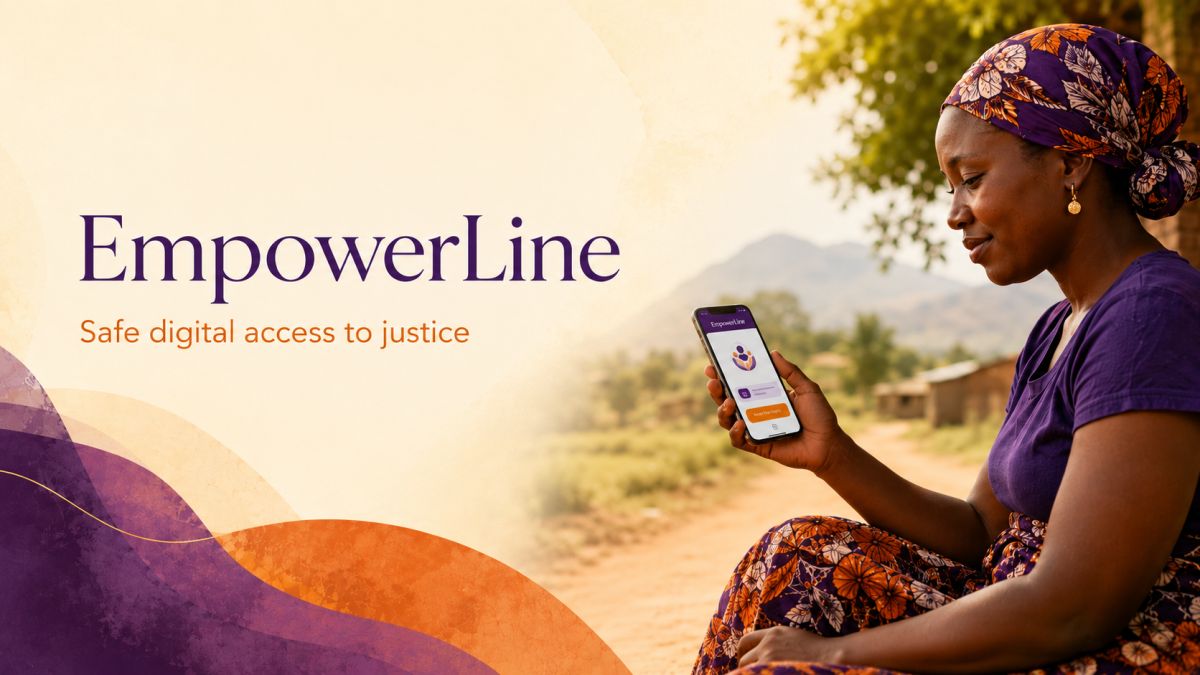
The EmpowerLine App In Malawi, EmpowerLine speaks. The Gender and Justice Unit (GJU) is a non-governmental organization in Malawi that uses legal empowerment as a catalyst for gender equality and social and environmental justice. GJU works through strategic litigation, legal research, advocacy, and partnerships to promote access to justice across the country. In Malawi, 34% of women have experienced physical violence, yet only 40% of survivors seek help. Against this backdrop, EmpowerLine is changing what’s possible. EmpowerLine Malawi is a mobile and free platform that gives survivors of violence real-time access to justice, in their language, on any device. When laws exist, but justice is not arriving Despite progressive laws, for the vast majority of women in Malawi, especially in rural areas, it remains inaccessible. The reasons include limited access to legal information, language barriers, stigma, and a justice sector that is largely male-dominated and often rules against women. GJU is doing critical work to help women access information on domestic violence statutes, child protection, and workplace rights. Building trust, one tap at a time With Chameleonic, our work focused on a clear challenge to bridge the justice gap using technology. The question was not simply whether we could build an app, but how to build one that a woman would trust and actually use in a moment of need. Our project applied human-centered design methodology to shape a digital product strategy. Our role was to translate GJU’s deep legal knowledge into a scalable, user-friendly tool. We ran workshops and conversations with GJU staff to map the user journey, with a strong emphasis on privacy and simplicity. We designed the experience to feel like supportive, conversational guidance. In parallel, we focused on building GJU’s internal capacity to manage and update a digital knowledge base. A lifeline, now open 24/7 The immediate outcome was the launch of the EmpowerLine App . Integrated with GJU’s existing hotline, the app now gives women access to 24/7 scalable support. EmpowerLine was co-created with and for paralegals, communities members, and survivors. Every word and feature was shaped by real needs. Women who once faced stigma or fear now have a private way to seek help. Months after launch, while the numbers are not yet large - over 270 downloads - we have not yet focused on marketing. We know the tool serves as a first-line response for women in crisis, but we also know the impact can grow. GJU’s credibility as a digital leader has strengthened. They have a tangible asset that demonstrates how to scale justice in a low-resource setting. EmpowerLine works because it is integrated into GJU’s broader model: community liaisons, legal clinics, mobile courts, psychosocial support, and partnerships with justice-sector actors. GJU can now provide survivors and community members with immediate, private, 24/7 access to legal information and referral pathways, even when they are far from a legal clinic, unable to travel, or not ready to speak directly to another person. Before EmpowerLine, our work depended more heavily on in-person legal clinics, community liaisons, hotline support, and mobile court processes. Those remain central, but EmpowerLine now keeps legal empowerment available between those points of contact. This means a survivor can take the first step anonymously, in her own language, and on her own phone, while still connected to the wider GJU ecosystem of community liaisons, psychosocial support, legal aid referrals, and formal justice pathways. In that sense, EmpowerLine has helped us move from episodic support to continuous support. - Sarai Chisala-Tempelhoff, Founder of the Gender and Justice Unit As the consultant responsible for this project, I learned that the real barrier was not technological literacy, it was trust. Removing the fear before removing the questions. The women using this app are concerned about their data and afraid of further violence. We worked to eliminate those barriers. The app is free to access, and it includes a list of important emergency telephone numbers, being the most accessible and user-friendly for anyone that needs support. Another learning is the chatbot. We trained it not to hallucinate - a common problem with many AI systems - so it restricts itself to information found only in the available legal documents or contacting a legal professional. This is an ongoing challenge, because most of the time the chatbot will ask the person to contact a legal professional directly. Still building, still listening The ongoing work of an app also involves real testing and feedback-driven improvements, which we are currently pursuing. We are now refining the chatbot in more detail, making it accessible via audio, and working on an update to improve the bilingual option (in Chichewa). For GJU, the project fundamentally reshaped its approach to decision-making. Today, every programmatic choice - whether digital or legal empowerment - begins with a single, grounding question if the survivor will feel safe enough to use, understand, and act on the information it provides. This shift means that anonymity, local language, survivor safety, referral pathways, and community ownership now carry significantly greater weight in the organization's strategic discussions and resource allocation.

01 Jun, 2026 07:43 Read more

Steve Sweet<>FIMA Chile

Financial planning and analysis for good decision making. Chile-based environmental advocacy charity FIMA has a strong record of managing its funder grants, keeping diligently within spend requirements, and being cautious with its unrestricted monies. It was time to evolve and also 'step back' to view the overall FIMA Finances at organization-level: The bank balance was healthy, but how much was grants part way through maturity, and how much ‘real’ reserve funds?; To what extent were committed costs over the near future covered by secured/planned income? How would finances would look over the next 1-2 years in various (income and spend) scenarios ? Not only were answers needed now – particularly for some logjammed decisions around, eg, whether desired pay-rises could be afforded – but processes and tools to make similar analysis going forward would also be valuable for the Finance team – who could then more constructively advise in leadership decisions on planning on fundraising and spending. The Work The project team was FIMA’s Finance team (Maca and Cata) and Steve Sweet, a qualified accountant based in the UK with experience in charity financial planning. Carried out over several weeks in summer 2024, regular 1.5 to 2 online coaching/ working sessions connected London and Santiago. First, an exercise was needed to see what was the 'true’ baseline of Free Reserves, stripping out the timing differences of some 20+ live grants – some of which paying in advance, others in arrears - and all in various stages of spend progress. The work produced a clearer organization-wide financial picture for FIMA, using accrual-based analysis to illuminate what baseline unrestricted funds were truly at its disposal. This became a vital starting point for financial planning . A simplified version of the Balance Sheet is shown! Next, a view on what a sensible level of reserves might be for FIMA going forward was needed. Too little could risk short-term income or cash shortages, if unexpected income or costs shocks arose, but too much risked missing chances to further mission or raise further funds. With the critical guidance and framework for Steve, and discussion, a new balanced distribution was reached, and we could compare that to the current situation (finding opportunities for optimization) To look at how the future could play out, a bespoke Income and Expenditure Excel model was built and co-populated (see graphic). A ‘window’ of 17 months, broken into c. 6 month planning increments, was used to balance planning with uncertainty. Pragmatic management accounting training was passed on, with concepts such as matching incomes and expenses to time periods to iron out tricky timing illusions produced by cashflow-only accounting. Incomes and expected costs for both a Base-Case and Best Case-scenario were apportioned to the periods, illuminating the extent to which current revenue plans covered costs overall. Gradually, as we populated the templates together, more clarity emerged on whether the business model was on track; where cost trade-offs might be needed in the future; and the extent to which new fundraising plans covered staff retaining and overall growth. How did it go, 18 months on… Maca from FIMA comments: “We now have a clearer picture of our financial situation, which allows us to make future decisions with greater confidence. Without this certainty, we had to operate with extreme caution, which meant we couldn’t, for example, determine whether we could afford to give our staff a pay raise. “ Definitely the biggest change for us was gaining confidence that what we're doing is right for the safe administration of our funds. Now we have an improved and validated decision-making tool, tailored for our non-profit model of administration. This allows us to see the bigger picture, adapt our decisions to the current scenarios and adapt if necessary. ” The work has also informed a follow-on project, also through Non-Profit Builder, to develop a formalized fundraising strategy in line with a broader charitable strategy. Finance have felt more confident in integrating into this fundraising strategy work, and the strategy is linking with financial sustainability needs. On what Maca would say to another organization considering a similar engagement: “I would tell them to seize the opportunity without hesitation. I would also tell them that it may require a lot of hard work and dedication, but the results are worth it”. From Steve’s point of view: “it was very gratifying to know the work helped free FIMA up to continue its important mission, with new confidence and insight. It was vital that FIMA were willing to ask the ‘why’ questions, and being sure they understood, during the process; this helped them build capacity and confidence to operate going forward”.

06 May, 2026 08:34 Read more

Undaunted Consulting <> Alliance for Tribal Clean Energy

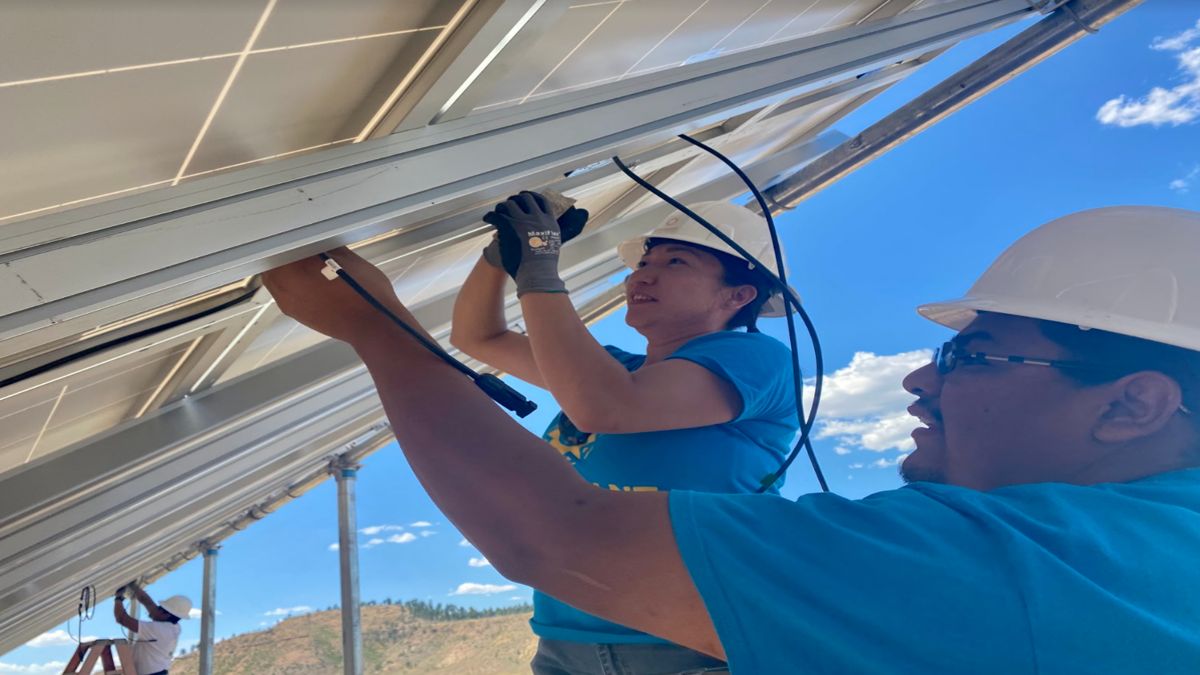
Strategic Tech For Meaningful Change. Data Behind the Mission: Building a System to Support Strong Partnerships The Hurdle: When Manual Processes Mask Meaningful Impact The Alliance for Tribal Clean Energy (the Alliance) is building indigenous sovereignty through clean energy. Acting as expert advisors, they work alongside first nations to scope projects, vet contractors, and secure funding to build renewable energy infrastructure on tribal lands. Behind the scenes, however, their internal capacity of the fundraising team was getting bottlenecked by layers of manual processes. Important relationships with philanthropists and sponsors were hindered by manual exports and mail merges. Staff “touch points” were siloed in email threads instead of a shared system that would help to ensure 360 degrees of care. For a team scaling at lightning speed, their CRM felt less like a tool and more like a digital paperweight. The Strategy: Automation as Empowerment Undaunted Consulting does not believe in set-it-and-forget-it services. We believe in building an organization’s internal power. For the Alliance, our consultants Mike Baker and David Dunn provided a strategic mix of technical automation and deep-dive education to turn their CRM into a functioning asset. We began by auditing their manual donor processes and replacing their copy-paste templates with the Alliance branded Salesforce templates. Merge fields pulled information directly into each message, ensuring accuracy and saving time on manual edits. A custom automation notified staff immediately when an online donation was made, ensuring that "thank you" notes were timely and professional. We also worked to integrate their system with event planning platforms and built out the architecture needed to differentiate between various sponsorships and opportunities, ensuring the data looked like the work they actually perform. " Working with Undaunted helped us set some processes and keep track of information that’s really important for the organization." — Gwen Torres, Manager of Fundraising & Development, Alliance for Tribal Clean Energy The Shift: Autonomy over Agency We focused on education as empowerment, spending significant time in one-on-one coaching sessions showing Gwen, Ruby, and the team how to navigate the back end, create their own lists, and send bulk messages independently. Our approach prioritized autonomy: equipping the team with the knowledge and tools to manage the system internally, rather than requiring (and having to pay for) ongoing external support. This collaborative approach turned a static database into a living source of truth where the team felt comfortable asking clarifying questions to better communicate their needs. Gwen stated: "It has helped to have someone as knowledgeable as David ask the right questions so that we can better communicate what we need. Sometimes we don't even know what we need or what that looks like in Salesforce. David seems to have a good knowledge of what nonprofits need and [is] also very sensitive to the nuances that our organization has." Ruby Merritt, the Alliance’s Development Coordinator, saw the immediate impact on her capacity, noting that the custom build allowed the software to finally work for the team rather than against them: "It's just made it more efficient. It's made it easier. It decreases your workload in the sense of it being faster and working more for us and for what we needed. It’s just very much catered to what we do. So that helps us be able to navigate it quicker and more tailored to just what we need from it." The Result: Protecting Data and Reclaiming Time By moving the history of their relationships out of inbox silos and into a centralized system, the team protected their most valuable assets while ensuring transparency. We helped them capture critical data that was previously being lost in "the mess" of email threads, allowing them to track the history and progress of specific projects with a few clicks. This has streamlined their internal reporting, moving from a situation where looking for data could consume a whole day to one where information is "live" and accessible. Chéri Smith, the Alliance’s President & CEO, shared: "As the Alliance's chief fundraiser, I used to spend precious time chasing down information that should be at my fingertips. Now it is. Having a system that works the way we work has freed me to focus on what matters most – building the relationships that power our mission." — Chéri Smith, President & CEO, Alliance for Tribal Clean Energy "A lot of our data is sensitive and I just feel like [Undaunted] upheld the data integrity when working with it." — Ruby Merritt, Development Coordinator, Alliance for Tribal Clean Energy " There's less loss of data. Training to understand that these are available tools helps us capture data that we need when we need to track the progress of certain projects." — Gwen Torres, Manager of Fundraising & Development, Alliance for Tribal Clean Energy This newfound clarity has fundamentally changed how the development team reports their impact. By building out custom dashboards and reports, we gave the team the tools to analyze their successes and refine their donor outreach based on real-time performance metrics. " To have it live, analyzing our successes and then customizing the types of opportunities we have, the types of donors that we have, and then being able to put that in a report, it really helps us see which aspects of our work are growing and what needs attention. It's streamlined our work and provides insights on where we need to improve." — Gwen Torres, Manager of Fundraising & Development, Alliance for Tribal Clean Energy The Conclusion: A Foundation for Growth The Alliance is now equipped with a live engine for social change that allows them to focus on where they are needed most. By streamlining their workflow and increasing overall efficiency, the team has transitioned from managing administrative friction to analyzing their successes in real time. This success has triggered a larger effort within the organization, as other teams see the value of centralized data and are beginning to expand how they use Salesforce to support the other pillars of the Alliance’s work. With a system that is catered to their specific needs and a team trained to manage it, the Alliance has the autonomy to scale their impact across indigenous communities. "It helped us streamline our workflow. It just increased our overall efficiency. Teaching us the automations that he did and just the quick processes that he did definitely increased my day-to-day productivity." — Ruby Merritt, Development Coordinator, Alliance for Tribal Clean Energy We’ve had other consultants before but there was the most progress with… Undaunted." — Gwen Torres, Manager of Fundraising & Development, Alliance for Tribal Clean Energy Produced by- Undaunted Consulting

30 Apr, 2026 06:25 Read more

Jennifer Clickner <> Wikirate

Collaborating with Wikirate was nothing short of thrilling for me as a consultant. All the key components were in place for an exciting experience – a tight timeline, a high stakes influence opportunity, and a highly skilled professional suddenly faced with a new and somewhat daunting communication challenge. With the Communications Director away on maternity leave, Tom was asked to step in and lobby at the European Commission on changes to the laws that would substantially tighten the restrictions and penalties on slave labour, notably in the world of fast fashion. What’s more, he was to appear on a high-level panel, alongside established experts and in front of an audience of key decision makers. We set up our timeline, outlined the challenges, and quickly got to work. Tom was highly experienced but more accustomed to working behind the scenes, so taking centre stage was less familiar, and he was aware how much was riding on a successful outcome, so no pressure! Months of policy work and development was finally coming to fruition, and his organization was counting on him to get the project across the finish line in Brussels. But he, like many of us, aren’t necessarily thrilled at having to step into the spotlight and advocate on stage, especially when so much is at stake. We worked on key techniques for crafting a persuasive communication strategy, how to create engagement with target stakeholders, how to use compelling storytelling for greater impact, and effective public speaking techniques that not only helped him to have more confidence and presence when he took the stage, but also to handle challenging questions and successfully deliver his entire communication strategy with ease. I was anxious for news, and upon his return, Tom kindly took the time to write me with news. Here’s a short excerpt: Hello Jennifer, I wanted to let you know that the event went fantastically well. Here are my observations: During the panel: - When speaking I noticed more people physically look up - After I spoke, during the panel discussion, people referenced what I said in the beginning - The Head of an EU agency kept physically turning to me while speaking as though to acknowledge or reference me - of course this is my interpretation but I have never experienced something like this in that way before - I spoke less than the others, but I think I spoke more effectively. I think this covers everything, apart from saying a big thank you. You were the right person at the right time, a real gift. And Tom later posted this on Linkedin: Persuasive communication and effective public speaking are not skills we are born with, they are skills we can acquire through focused training and practice. I often equate it with learning to dance or to drive – at first, you’re having to think about everything you are doing, but it eventually becomes virtually automatic. And these skills help us at every level of an organisation and at every stage in our career, so why wait until you have an urgent challenge or high-stakes presentation, as you may not be able to find the “the right person at the right time” to help you ensure a successful outcome. SLIDES FROM OUR TRAINING:

24 Mar, 2026 09:00 Read more

Asna Bhana <> Makers Valley Partnership

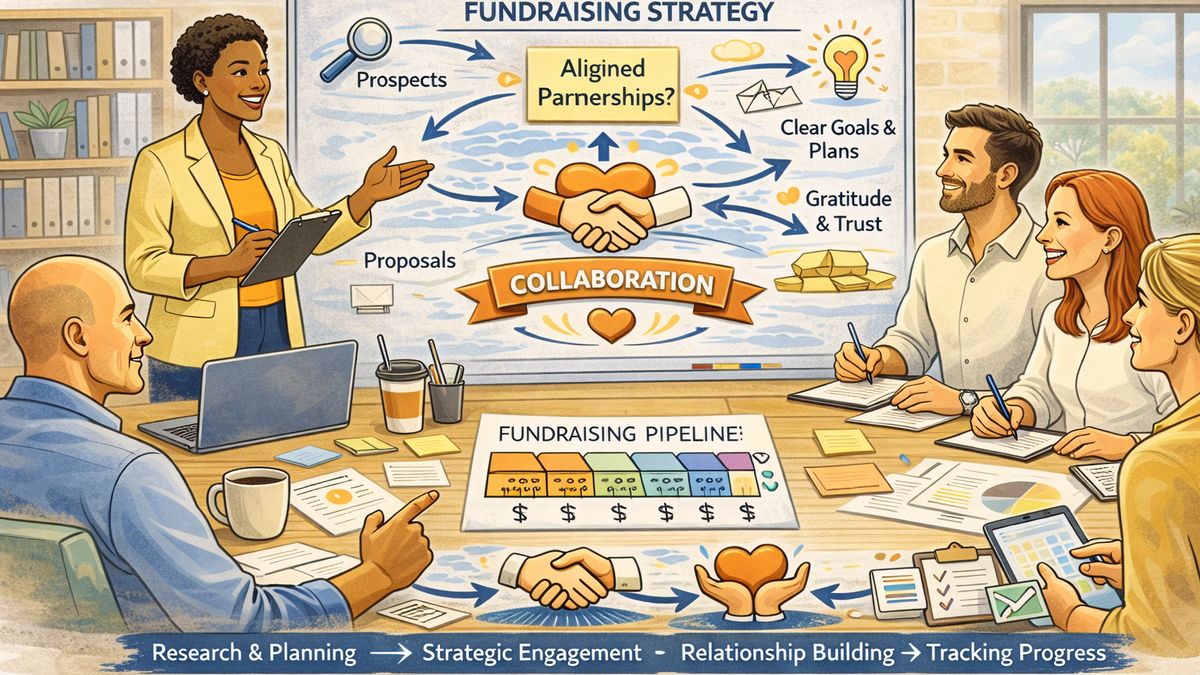
Summary At Makers Valley MVP, the challenge was not a lack of impact or ambition, but a fundraising approach shaped by capacity constraints and reactive rhythms. As a growing organization, fundraising often felt urgent rather than strategic. Over a six-month coaching journey, MVP strengthened its systems, posture and internal discipline , repositioning fundraising as a core organizational strategy rather than a survival task. What happens when mindset is combined with structure, discipline and systems? What we achieved: Secured funding from the Issroff Family Foundation Project-based funding from the British Council Improved visibility and management of the fundraising pipeline A leadership team that now enters donor engagements with clarity and confidence as strategic partners At its core, the work centred on building aligned partnerships, engaging funders in conversations about MVP’s asset-based community development model and the systemic change it enables. Rather than presenting needs, the focus shifted to articulating shared impact and long-term value. This shift was embedded through a disciplined weekly rhythm within MVP’s leadership structures: Consistency: Dedicated time for prospect research, relationship building, proposal development and follow-up Active Listening: Engaging funders in dialogue about why MVP’s work resonates with their priorities, strengthening alignment rather than pitching need Gratitude: Proactive stewardship that builds trust before compliance, reinforcing long-term relationships Hurdles This young co-leadership team faces numerous challenges in the path 1. Capacity Constraints: They were juggling many balls (operations, programme, financial stability) while attempting to manage all fundraising tasks alone 2. Fragmented Systems: Lack of a centralized database led to missed opportunities and poor donor tracking 3. The “Reactive” Mindset: viewed fundraising as a desperate request for help rather than an exchange of value The Approach Makers Valley Partnership operates through an asset-based community development model, advancing bottom-up solutions that strengthen social and creative entrepreneurship in Johannesburg’s inner city. The organisation prioritises social justice, economic participation and ecological wellbeing as interconnected drivers of long-term change. The coaching process focused on three pillars of organizational growth 1. Deepening donor relationships through Retention and Reactivation strategies. Here, the team secured a renewed commitment from TUHF despite a change in the donor’s of funding priorities 2. Mapping of aligned opportunities through hands-on skill-share exercises using industry resources like Trialogue and Tshikululu Social Investments and opening up introductory conversations. 3. Setting solid foundations by building the Fundraising Engine (data-base development, pipeline instruments, board integration) Cultural Integration & Leadership Agency Integration: Fundraising was formally embedded into MVP’s weekly leadership cadence, ensuring consistent pipeline review, accountability and cross-team visibility. Leadership Agency – The leadership team strengthened its posture in donor engagements, approaching funders as strategic partners aligned around shared impact. As Noluthando Mdayi reflected: “We walk into funder spaces as equals, because we bring value.” Impact & Results Over six months, MVP strengthened its fundraising infrastructure and significantly improved pipeline visibility and conversion. New Funding Secured: Issroff Family Foundation and British Council Pipeline Strengthening: 10 confirmed active funders 5 active submissions under review 21 qualified opportunities with defined next steps 16 prospects identified for structured deep-dive research In closing As part of strengthening long-term sustainability, MVP formalized dedicated internal fundraising capacity, with Miso Mvelase taking on responsibility for maintaining pipeline visibility, stewardship and opportunity tracking. MVP now operates with a structured Funding Funnel framework and live tracking system, enabling disciplined prioritization, clearer board oversight and sustained fundraising momentum beyond the six-month period. The process reinforced a core principle: sustainable fundraising is rooted in trust, alignment and genuine dialogue. Long-term partnerships cannot be built on urgency, they are built on credibility and shared purpose. It’s been a true privilege to walk alongside these committed leaders and an incredible organization.

19 Mar, 2026 09:15 Read more

Call To Action Group-Jack Biss <>Lock The Gate

The Background Lock The Gate is a grassroots movement of farmers, traditional custodians and everyday Australians fighting destructive coal and gas projects across the country. Through effective campaigning, community engagement, access to legal advice and research, they protect Australia’s natural, cultural and agricultural resources – securing our land, water and food supply for generations to come. While grants and major donors had been strong income sources, there was an ambition to diversify and grow individual giving, creating a more balanced and sustainable income mix. Call To Action was engaged to develop Lock The Gate’s Individual Giving Fundraising Strategy – covering the full breadth of their IG program including cash and regular giving acquisition and retention, their shop, gifts in wills, and campaigning activity. The Challenge Lock The Gate’s small and talented team was predominantly focused on grants and major giving income streams, as well as campaigning to protect our natural resources. While they’d identified an opportunity to grow individual giving, and knew their campaigning supporters were an untapped resource, they didn’t have capacity to plan a strategy and map a clear path forward. It was therefore crucial that our fundraising strategy accounted for their resources, budget and capabilities. If the strategy wasn’t actionable, it might as well never be written! To help Lock The Gate achieve their goals, we needed to: Establish clear, measurable KPIs for IG fundraising activity Conduct market research to determine who their existing and previous donors were Segment audiences based on propensity and motivation for giving, then build out detailed personas Determine the right fundraising model for an advocacy-led organisation Develop strategies for both one-off and regular giving acquisition and retention Identify opportunities across additional revenue streams Create a clear roadmap for rollout Provide all the tools needed to implement the strategy The Solution We followed our Discover, Decide, Deliver methodology: Discovery & Workshops We kicked off with a deep-dive discovery phase that drew on stakeholder and donor interviews, an internal donor survey, donor data analysis, campaign and email performance reviews, sector benchmarking and peer analysis of organisations including Greenpeace and Climate Council. This data helped build a comprehensive picture of Lock The Gate’s audiences, fundraising activity and the wider individual giving landscape. We identified what was currently working and what wasn’t, resulting in a clear list of opportunities to maximise and challenges to overcome. Crucially, we found that Lock The Gate had all the tools to employ a proven campaign-to-donate fundraising model – converting their passionate base of petition signers and action takers into financial supporters. After presenting our discovery findings, we held two collaborative workshops with Lock The Gate’s team to co-create the strategy – setting KPIs, targets and a shared fundraising vision, and mapping detailed donor journeys. Strategy Development The resulting strategy laid out Lock The Gate’s individual giving playbook for the next five years. It included: KPIs, objectives and targets An overarching value proposition and refreshed case for support for both cash and regular giving Messaging framework spanning evergreen and campaign-specific asks Detailed audience personas and donor journey maps A campaign-to-donate model as the primary acquisition engine Strategic initiatives covering acquisition and retention, gifts in wills and the merchandise shop A fundraising calendar of activity by channel Detailed implementation playbooks A clear roadmap for rollout Crucially, the strategy came with a toolkit containing media plans and performance models – giving Lock The Gate the tools to make informed budget and investment decisions. Delivery Following the strategy, we were engaged to implement one of our low-hanging-fruit recommendations – setting up and launching Lock The Gate’s Google Ad Grant account, unlocking $10,000 per month in free search advertising. The Result Comprehensive 5-year strategy with clear KPIs, targets and a roadmap to acquire thousands of new donors annually Landing page and checkout optimisations drove an immediate uptick in new donors $10,000/month in free Google Ad spend unlocked through Ad Grant setup Call to Action have been a breath of fresh air and pivotal in developing our fundraising strategy. They took the time to understand our challenges and worked collaboratively with us to identify achievable solutions. Their insights were not only actionable but also aligned with our capacity and resources, empowering us to move forward with confidence. Sharyn Stein Giving Relationship Coordinator @ Lock The Gate

10 Mar, 2026 00:59 Read more

Helen Vosloo <> Southern Africa Resource Watch (SARW)

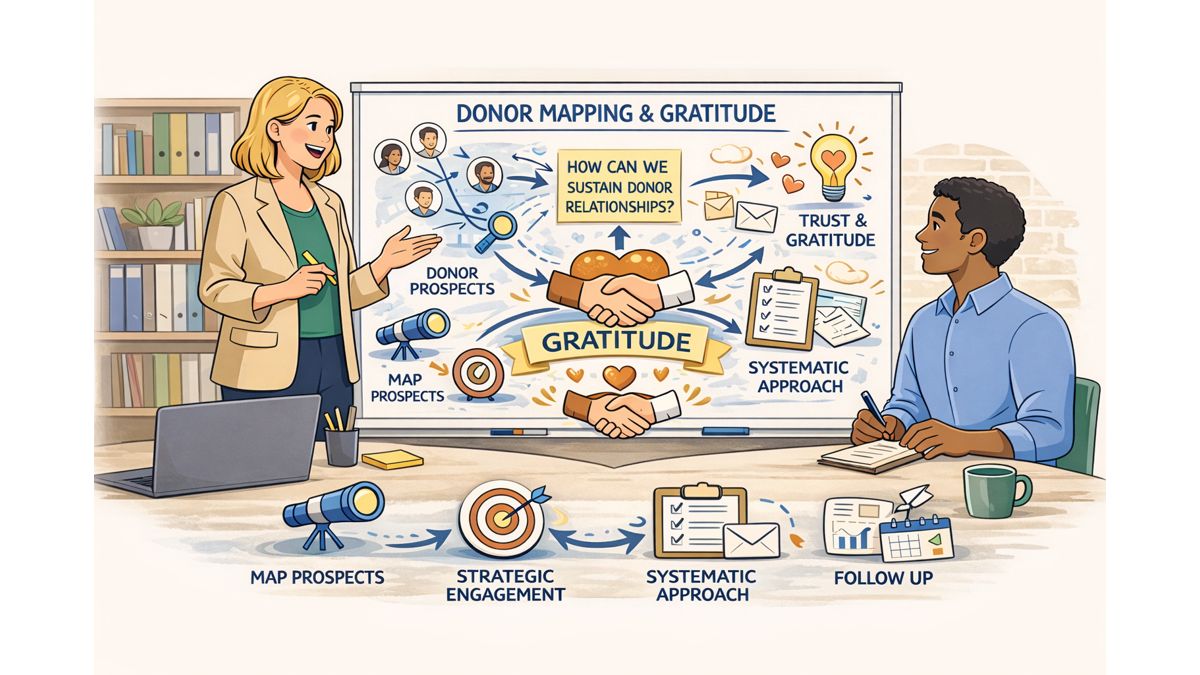
The Context: The Relationship Master and the Capacity Gap Southern Africa Resource Watch (SARW) is a leading voice in ensuring that Africa’s natural resources benefit the public good. At its helm is Claude Kabemba, a natural leader and a master at building relationships. While Claude excels at connecting with donors on a personal level, a systematic approach to coordinate all fundraising activities, map new prospects, or consistently nurture existing relationships was lacking. This made for a gap between initial donor interest and sustained, strategic engagement. The back-end systems for tracking and managing donor relationships were not yet in place, creating a risk of missed opportunities and donor attrition. One of the core questions were: how could SARWatch translate its strong personal connections into a sustainable fundraising Engine? The Work: Fundraising Coaching for a Donor-Centric Mindset From November 2024 to June 2025, fundraising coach Helen Vosloo from Funding Solutions engaged with Claude in a comprehensive coaching partnership. The work was twofold: one-on-one strategic sessions with Claude and practical donor mapping support for an interm. The approach was not about reinventing the wheel, but about sharpening the tools Claude already possessed. The coaching focused on instilling a deeply donor-centric approach across all fundraising activities. This involved a systematic process for relationship building, moving from reactive proposal writing to proactive, meaningful engagement. One key element (for the purpose of this case study) centred around the role of gratitude in relationship building. The Outcome: A Foundational Shift in Thinking The most significant outcome was not a new system, but a shift in mindset for Claude. He embraced the idea that fundraising is a continuous cycle of relationship and trust-building. The coaching provided a space for him to reflect on this and formalise this as a core part of his leadership. As Claude shared in a recent conversation, the single biggest takeaway was the power of gratitude. He began scheduling regular, bi-monthly check-ins with his donors with no other agenda than to express to share a brief update in a spirit of gratitude. Now to be clear: Claude is naturally a people’s person. He has extraordinary people skills. Yet, he reported that this simple mindset of appreciation fundamentally changed the dynamic of his donor relationships. “Previously, I didn’t used to stay in touch with our donors as much. Now, it’s scheduled into my diary. The biggest takeaway of the fundraising coaching was that I learnt the importance of gratitude.” Claude Kabemba The Lasting Impact: An Unexpected Windfall Months after the formal coaching engagement ended, the impact of Claude’s new approach became stunningly clear, when a long-term institutional donor, who had a multi-year grant agreement with SARW, reached out to Claude unexpectedly with an offer of an additional, unsolicited $300,000. Their message was simple: “I’ve got a spare $300,000, can I help you spend it?” For Claude, this was a true “a-ha moment” The donor, feeling seen and appreciated not just for their money but for their partnership, was actively looking for ways to deepen their support. The outcome demonstrates that which we at Funding Solutions know to be true. People give to people. The consistent, authentic honouring of a relationship is what underscores good fundraising practice. Much more so than a relationship based on delivering against set expectations. Neuroscience research supports this; expressing and receiving gratitude activates brain regions associated with social bonding and reward, making people more likely to engage in generous, prosocial behaviour. The return on investment was not just financial; it was a validation that building trust is the most effective fundraising strategy of all. A Reflection on the Work What surprised me most about this engagement was the speed and scale of the impact that came from such a simple shift. We often believe that fundraising success requires complex strategies and intricate systems. But Claude’s story is a powerful reminder that the most profound changes often come from the most human places. He didn’t need to become a different leader; he needed a framework to amplify his natural strengths. This engagement taught me that coaching is often about holding up a mirror and helping a leaders see the powerful tools they already possess. References [1] Bartlett, M. Y., &amp; DeSteno, D. (2006). Gratitude and prosocial behavior: Helping when it costs you. Psychological Science, 17(4), 319-325.

09 Mar, 2026 06:37 Read more

Christine Oram<> Action for People Ecology and Emancipation (AEER)

In 2023, AEER’s Coordinator recognised a pivotal moment for the organisation. With deep experience in community engagement, research, advocacy and campaigning, he had built strong external credibility. Yet to sustain and scale impact, AEER needed stronger internal Foundations. He sought support to sharpen his leadership and management skills, strengthen team cohesion, and move beyond a project-by-project approach toward building a resilient institution capable of long-term impact. The work The consultancy began in August 2023 and ran through April 2024. It combined: ● Facilitated group sessions to develop a three-year business plan and budget. ● A clear, aligned fundraising strategy. ● Individual leadership coaching for the Coordinator This first phase created strategic clarity and surfaced deeper organisational development needs. Those insights shaped a second phase of support (February 2024–January 2025), focused on strengthening AEER’s operational systems, staff culture, recruitment and retention, governance, long-term financial sustainability and included leadership team coaching. Strategic organisational outcomes AEER’s most profound shift has been moving from short-term project delivery to a systemic, Institution-building approach and building the organisational culture. One of the key learnings has been the “awareness that we need to build our institution. An institution is not a single person.” Today, leadership and staff think beyond individual projects. They consider sustainability, systems, and organisational continuity. Leadership & Team Development ● A defined leadership team with agreed working practices ● Greater internal cooperation and transparency ● More open and strategic discussions across the team ● Leadership training now offered to staff. ● Growing recognition of the importance of stability and a leadership pipeline Governance &amp; Board Engagement Targeted work on governance has led to: ● Increased board engagement ● Stronger strategic support from board members ● Clearer recognition of the need for continued governance strengthening. While progress is evident, AEER remains committed to further developing governance structures as part of its institutional maturity. Recruitment, induction and retention Over the past 12 months, AEER has significantly strengthened its recruitment and onboarding Systems. Improved hiring processes, including more strategic use of social media, have enabled the organisation to attract more experienced and technically skilled staff. Induction processes are now more structured, with greater emphasis on giving new staff time and space to learn. The Coordinator reflected: “I hadn’t anticipated the value of giving new staff time and space to learn when they first join the organisation. Effective onboarding makes a real difference.” The lasting impact Improved communications and social media strategies have become a core pillar of AEER’s organisational strategy. A stronger public profile has: ● Increased credibility ● Attracted higher quality candidates. ● Strengthened engagement with government stakeholders. This institutional strengthening is already translating into deeper community impact. Community engagement in East Kalimantan AEER is supporting communities in East Kalimantan affected by coal mining and lacking access to electricity, following feasibility studies on energy access. With strengthened internal capacity and newly recruited technical expertise, AEER is working toward community ownership of sustainable energy solutions — moving beyond short-term access toward long-term empowerment. Supporting communities near the Cilegon Steel Plant AEER is also supporting communities living near the Cilegon steel plant, where residents face serious air quality concerns and intimidation from actors associated with the plant. The recruitment of engineers and technical experts has strengthened the community’s ability to document environmental harm and present evidence to the National Human Rights Commission. Communities are now more organised, confident, and strategically equipped to advocate for their rights. Key learning from the consultancy support experience “Advocacy - vision and mission - won’t happen without the institutional supporting structures to Deliver.” “Effective staff engagement, management, delegation and trust is key to success.” “A flexible, bespoke approach, aligned to AEER’s evolving needs and implementation capacity, was central to the success of this partnership. Incremental change, grounded in organisational readiness, enabled transformation without overwhelming the team.” Advice from the AEER coordinator to another organisation looking for similar support “Forces for good in our society are not strongly organised - e.g., lack of good climate policies, need to improve how our organisations are run, healthy dynamics and structures to be impactful, particularly for young leaders. This is particularly important for community and advocacy leaders without management experience. Find the support you need to build a strong and effective organisation.”

05 Mar, 2026 13:07 Read more