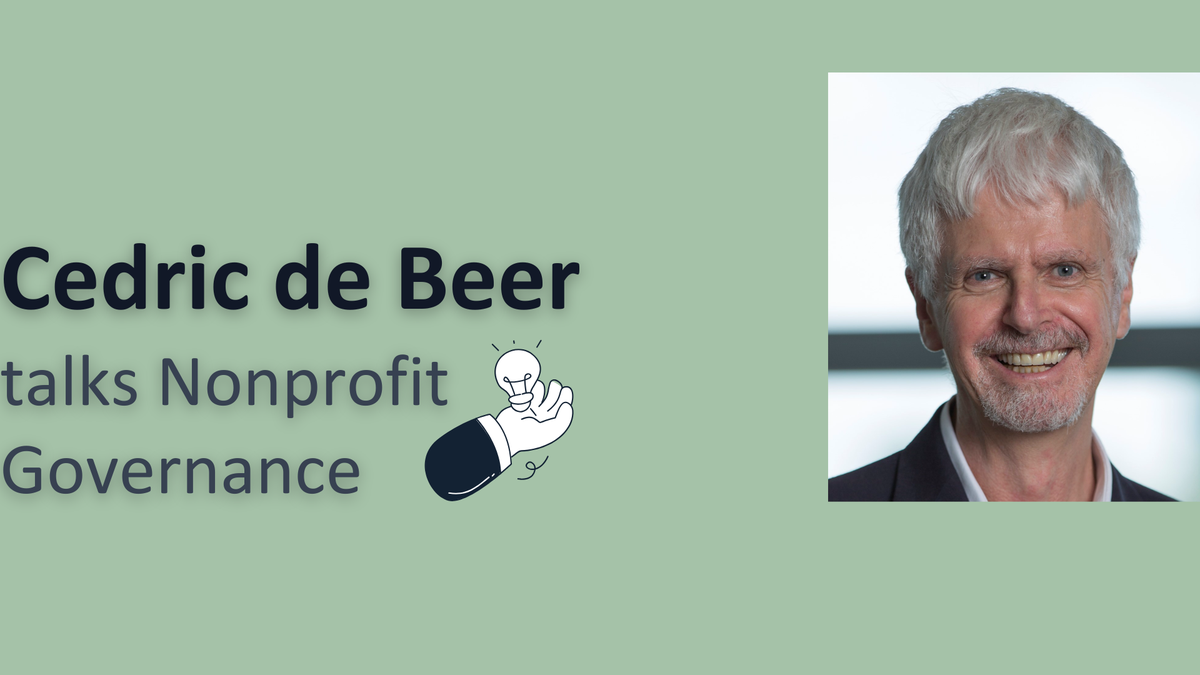
At its best governance is a statement: “This is how things work around here. We have the policies and structures to do things right. It makes life easier for everyone.
Everyone recognizes the need for governance. Funders demand it, the law requires it. And there is a lot of useful material on how to do it right. I want to make a case for the value of governance and how to do it well.
I am sure that many NPO leaders recognize the need, but still resent the time taken on board meetings, audit processes, delegations of authority, HR policies etc. My contention is that governance, done well, creates both certainty and effectiveness.
I spent my early working life associated with NGOs without any real governance. They were mainly small and worked fine. I never thought about governance. Two shocks changed my mind:
First in 1994 I found myself chairing the board of a very reputable and significant South African NPO. The founders left, the new CEO turned out to be corrupt, and after a rapid downward spiral we closed the NPO and returned funds to the donors. Imagine if there had been no board, no whistleblowing, and no rules governing the use of the company credit card?
Then in 1995 I was appointed CEO of a nonprofit financial institution supporting emerging construction businesses in South Africa. It was jointly funded by the SA Government and a large US based philanthropy. For the first two years I could not come to terms with the volume of board meetings, subcommittee meetings, staffing and remuneration policies, rules governing banking and much else. I sometimes felt that I had no time to do the work for which I was employed.
Over time the benefits shone through:
The board as talent and support : There were board members who brought knowledge, networks and experience that were priceless.
The board as cover When clients, staff members or government officials asked for special treatment of one sort or another it was wonderful to be able to say: “That’s not in our policy, but I can check with the board you want me to.”
The board as guarantor of transparency. At the end of board meetings one of the non-executive directors would look at me and ask: “Is there anything else we should know about that you have not told us?” You can be sure that the board reports were comprehensive, and all risks were well described.
The board as guardian of the slippery slope. Good rules and effective oversight prevented any temptation to take short cuts. Sometimes I felt it would be convenient to fill an urgent post or consultancy with someone I knew could do the job without all the hassle of a formal recruitment process. But that is the first step on a slippery slope to nepotism. If the CEO does it once, other managers will follow suit and soon it becomes the culture of the organization.
Reporting regularly to the board also makes it easier to satisfy funder reporting requirements and to produce annual reports. The information is all there and ready for use.
The point is that decision making and quite a lot of the work of the executive becomes much easier when there are clear guidelines, and a board to make sure you stick to them.
In the end I became an ardent convert to good governance. It’s like an organizational social contract: This is how things work and there is so much that we don’t have to think about all the time – because there are policies and processes and proper monitoring and reporting. We can just get on with our work.
Bad governance can be difficult, or even toxic. That’s a topic for another blog, and that’s why it’s important to focus on getting governance right – not just for reasons of compliance, but to make sure that everyone knows how things work around here.